
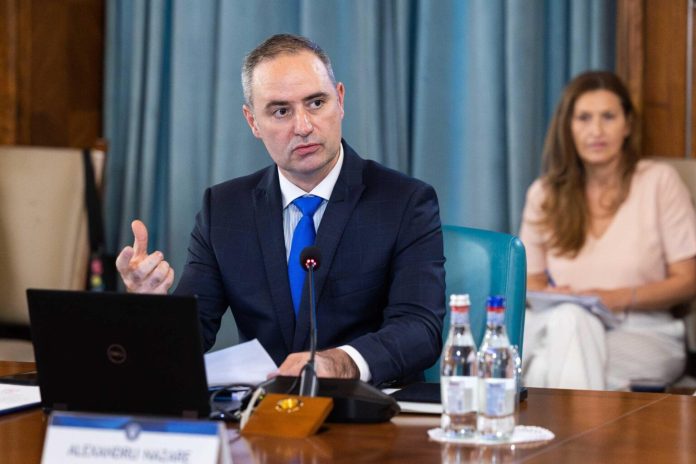
Interim Finance Minister Alexandru Nazare announces the fastest slowdown in inflation in years.
Data confirming a genuine correction of the economy’s imbalances. A little over a year ago, in June 2025, I took over the Ministry of Finance at a time when Romania could no longer afford to delay action. The very high deficit, massive financing needs and persistent inflation were fuelling one another. Every month without decisions meant more debt, higher interest rates and less room for development.
The government led by Ilie Bolojan undertook a difficult but necessary fiscal correction. The responsibility of the Ministry of Finance was to turn this course into a realistic budget, day-to-day controlled execution and prudent management of state financing. The objective was for fiscal policy to stop amplifying inflation and imbalances through ever larger deficits and to become an anchor of stability once again.
The first results are now visible in the economic data. The annual inflation rate fell to 6.2% in August, from 8.2% in July and more than 10% in June. This is the fastest deceleration in years and, unlike previous episodes, it is not the result of an administrative cap, but of a genuine correction of the economy’s imbalances. These figures confirm what until now had been only a promise.
Part of the decline is explained statistically, by last summer’s price rises dropping out of the calculation. At the same time, the other part is linked to the fundamentals: subdued domestic demand, a falling deficit and lower financing costs.
August’s data provide a number of indicators that need to be analysed carefully. Excluding fuels, consumer prices fell by 0.08% in August compared with the previous month. Food prices fell by 0.7% in a single month, while vegetables and fruit are now cheaper than they were a year ago.
The remaining pressure comes almost entirely from the international oil market: petrol and diesel are the only categories showing double-digit increases. This is a factor we do not control, although its effects can be absorbed – and an economy’s ability to absorb them depends on how sound its internal balances are.
This was the point of the adjustment that began last summer. I inherited a budget built on a model that could no longer be sustained. In the first seven months of this year, the budget deficit was 37% lower than in the same period last year, while public investment increased by 15 billion lei. We reduced the imbalance without halting construction projects.
These results matter not only in the economic statistics, but also in everyday life.
Almost half of this year’s deficit, approximately 3% of GDP, consists solely of interest payments on debt accumulated in previous years. This is money that goes neither to hospitals nor to schools nor to motorways. Every percentage point lower in Romania’s financing costs means resources recovered for such projects, with tangible results.
Nevertheless, inflation at 6.2% is still high. The fall in August does not mean that prices have returned to their previous levels, but that the pace at which they are rising is slowing. We know that Romanians continue to feel the high level of prices and the loss of purchasing power accumulated over recent years. That is why it is essential that we continue our correction efforts. Average inflation over the past 12 months is nearly 9.5%, and this is reflected in bills and on shop shelves. The recovery of real incomes lags behind the statistics, and for most people the past year has been difficult. We know this very well and that is why correcting the public finances remains a priority.
From this perspective, the next stage is just as important.
The direction is the right one, and the latest data now confirm it, not just the forecasts. Disinflation and deficit correction are two sides of the same process. Continuing it means discipline on the spending side, meeting the targets that have been set and shifting economic growth away from debt-fuelled consumption towards investment.
But economic correction is not an end in itself. It must create the conditions for confidence to return and for healthy growth.
An economy does not restart through laws, ordinances or public statements. It restarts when people and companies begin to have confidence in the future again. When a family can make a plan for two years. When an entrepreneur hires a tenth employee because he sees demand, not because he hopes. When someone who has postponed an investment decides to make it here, rather than elsewhere.
That confidence was the first thing lost when the economy slipped into severe imbalances, and it is the hardest thing to regain. It can be earned only through predictability: rules that do not change overnight, targets that are undertaken and respected, and a state that pays its bills on time. That is what we have tried to rebuild over the past year, and the results are now becoming visible.
Disinflation is, above all, good news for purchasing power. The more slowly prices rise, the more salaries and pensions are worth. This is how healthy domestic demand is rebuilt: through real incomes that are beginning to regain their value, not through deficits and increasingly expensive borrowing, as in the past. We are replacing the debt-financed consumption of previous years with consumption supported by real incomes, alongside investment.
Difficult periods can divide us or bring us together. In the history of any country, the periods that mattered were those that brought people together. We now have an opportunity we have not had for a long time: to turn a difficult year into an opportunity for a fresh start – energy, industry, infrastructure, European funds used down to the last euro, and Romanian capital that stays at home.
The road is not over and it will not be easy. But for the first time in a long while, the direction is the right one. Romania cannot afford to return to the imbalances from which it started,” Nazare said.


