
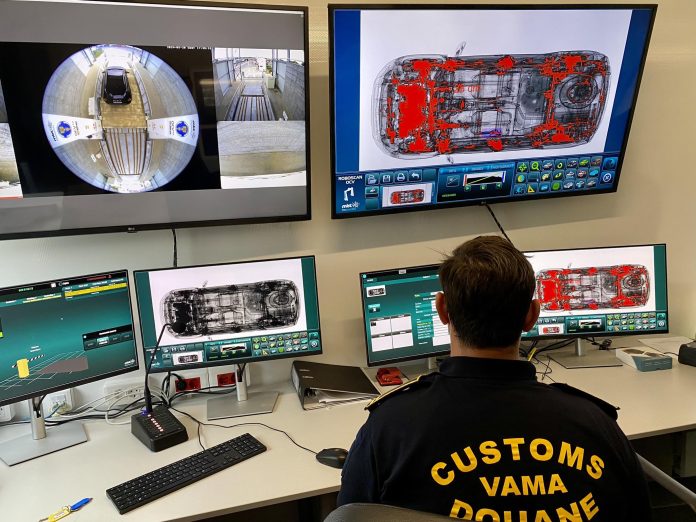
The Romanian Customs Authority (AVR) is participating in the Horizon Europe research and innovation programme through the CustomAI project, aimed at developing Artificial Intelligence-based technologies to support customs authorities across Europe and beyond.
According to a press release from AVR sent to AGERPRES on Wednesday, the official launch of the CustomAI project – „AI technologies for enhancing capabilities, greater efficiency and effectiveness for customs”, funded under the Horizon Europe research and innovation programme, took place on 6 November 2025.
„The CustomAI project marks the start of a 36-month partnership focused on developing Artificial Intelligence-based technologies to support customs authorities in Europe and beyond. The project will test advanced technologies through three dynamic use cases: container inspections at the ports of Valencia (Spain), Constanta (Romania) and Aarhus (Denmark), parcel inspections at Copenhagen International Airport (Denmark), and the detection of illegally exported cultural goods, through demonstrations carried out in a controlled environment,” reads the release.
By exploring new approaches for AI-based, safe, and efficient customs processes, CustomAI aims to provide solutions that could help authorities manage increasing trade volumes while optimising the use of human resources.
„Romania’s participation, through the Romanian Customs Authority, gives the country an important role in modernising control systems, with the Port of Constanta being one of the key points where the new technologies will be validated. The funding is provided by the European Union, represented by the European Commission, for eligible project expenses,” the release furthe mentions.
CustomAI is coordinated by an IT company from Denmark and involves an international consortium of 20 partners from eight countries – Denmark, Spain, Luxembourg, France, Greece, Romania, Turkey and Switzerland.
The consortium combines expertise from research institutions, industrial partners, and government bodies to ensure that the new technologies implemented will have practical applications.
A central aspect of the project is the direct involvement of end users. Customs authorities from Spain, Denmark, Romania and Turkey will actively participate in the development of functional and technical solutions that address the daily challenges faced by customs officers. AGERPRES